


Why some brands don't need to show you their logo

Sep 24, 2026
By John Wallace
Most brands think they have brand assets because they have a logo, a colour palette, a font suite and a brand guide.
That’s visual identity.
It’s not the same as being memorable.
Because the strongest brand visuals don’t just make something look on brand. They make people recognise you before they’ve even seen your name.
Think about it. Some brands can remove their logo completely and you still know exactly who they are. A colour. A shape. A line of copy. A certain style of photography. That’s all it takes.
So, let’s put that to the test.
Let’s play a game
Campaign #1

Well, this one's a bit of a freebie.
Even without the logo, chances are you knew this was McDonald's.
The ad doesn't show a burger. It doesn't mention the brand name. It doesn't even use the full Golden Arches. Instead, it relies on a handful of distinctive brand assets that have been reinforced over decades.
- Shape: Two beams of light form the unmistakable Golden Arches.
- Colour: The familiar red and yellow palette immediately signals McDonald's.
- Message: 'Open at Night' reinforces the brand's position as a convenient, always-there option.
- Consistency: These assets have appeared so often that your brain connects them without needing the logo.
That's the power of distinctive brand assets. Recognition happens before identification.
Campaign #2

There isn't much here, and that's exactly the point.
Even so, most people still know they're looking at Coca-Cola.
The campaign strips everything back and leans on a few distinctive brand assets that have become synonymous with the brand over time.
- Typography: The word 'Enjoy' appears in Coca-Cola's unmistakable Spencerian script.
- Imagery: The bottle's shadow creates a silhouette that's recognisable without ever showing the bottle itself.
- Messaging: The simple word 'Enjoy' has been associated with Coca-Cola's advertising for decades.
- Association: Together, these elements evoke the brand without needing to spell it out.
The logo may be missing, but the memory of the brand is doing all the work.
Campaign #3
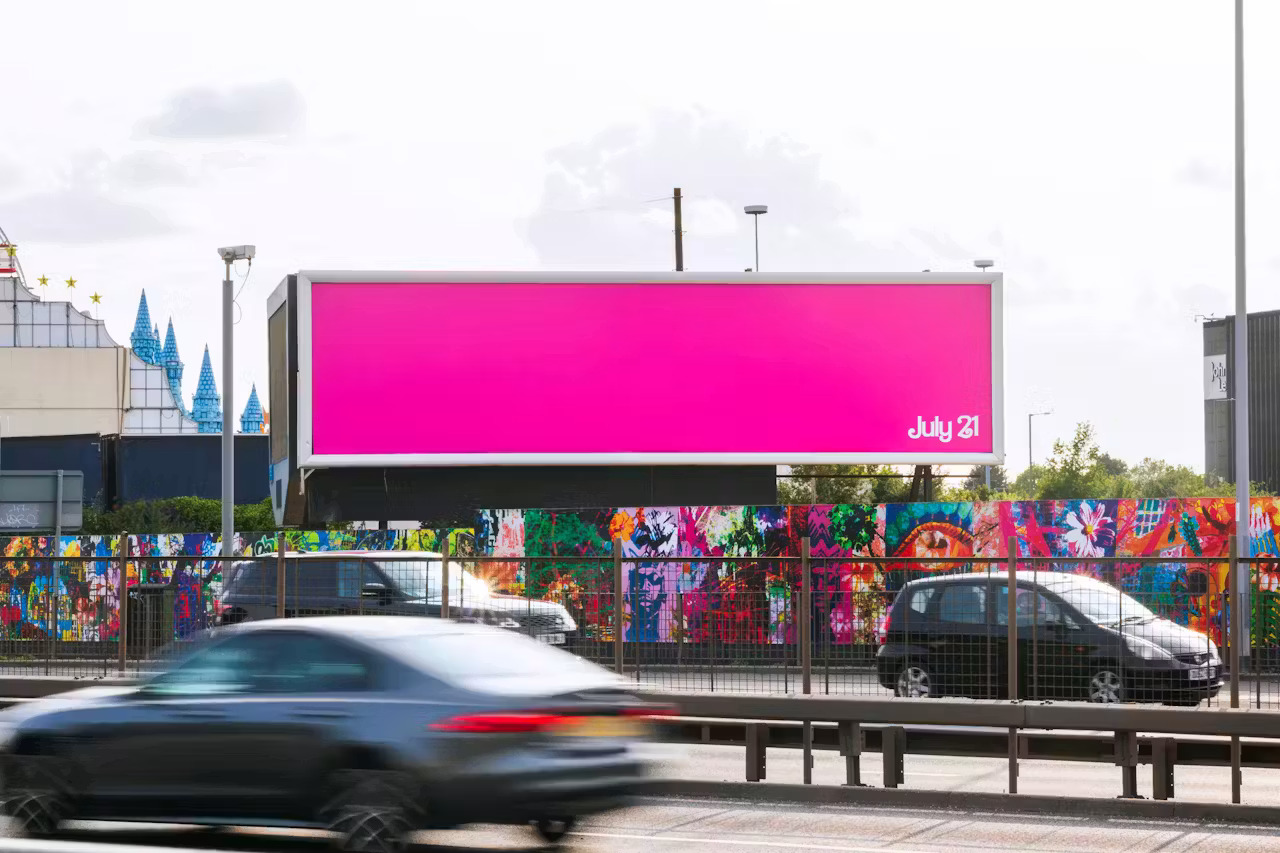
Who knew one shade of pink could do so much heavy lifting?
There's no logo. No Barbie doll. In fact, the only clue is a bright pink billboard and a release date.
Yet most people instantly knew exactly what it was promoting.
- Colour: Barbie Pink became the hero of the campaign, proving a single colour can become a distinctive brand asset.
- Consistency: The same shade was used across trailers, social media, merchandise and outdoor advertising, reinforcing the association everywhere.
- Cultural relevance: Decades of toys, packaging and pop culture had already cemented pink as synonymous with Barbie.
- Simplicity: By stripping everything else away, the campaign demonstrated just how powerful a well-established brand asset can be.
Sometimes, the strongest brand recognition comes from the thing you show the least.
Campaign #4
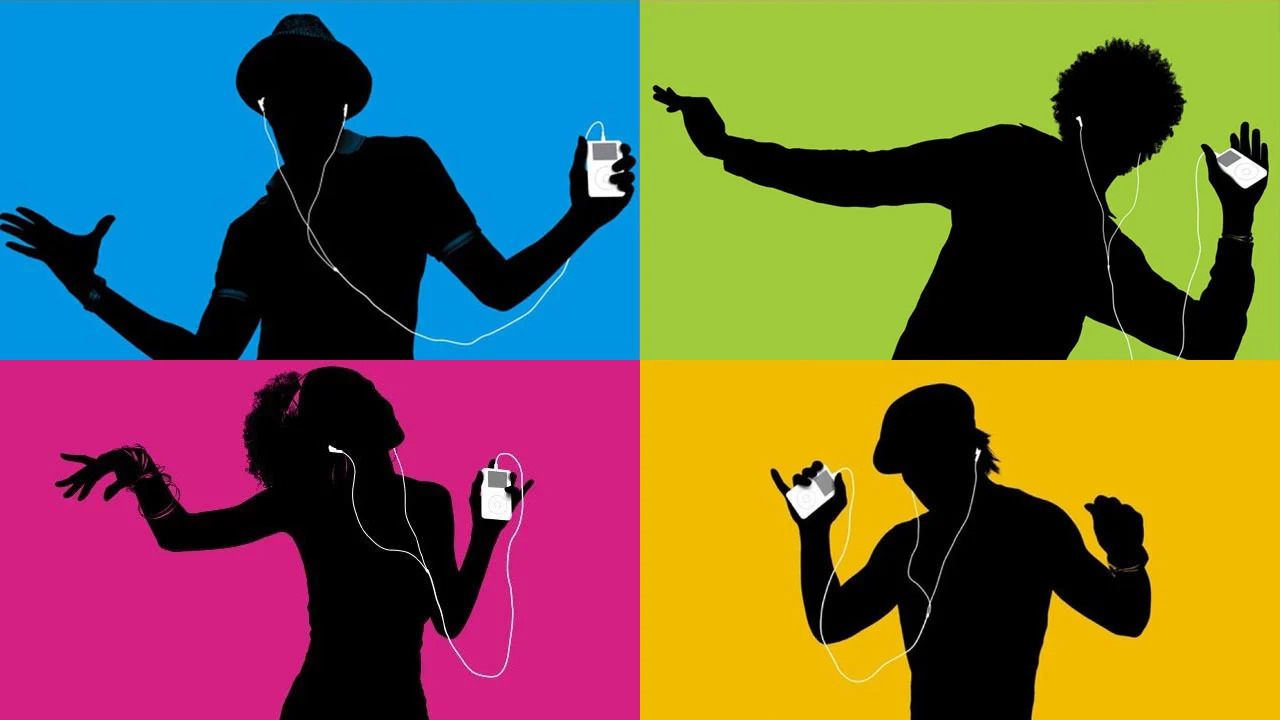
This campaign is more than 20 years old (I’m feeling old now), yet it still feels instantly familiar.
Apple built recognition through a visual style that became synonymous with the iPod. Bright colours, dancing silhouettes and white earphones made the campaign recognisable long before you noticed who it belonged to.
- Colour: Bright, high-contrast backgrounds made every ad impossible to ignore.
- Visual style: The dancing black silhouettes became as recognisable as the product itself.
- Product cues: The white iPod and earphones stood out against every background, becoming distinctive assets in their own right.
- Consistency: The same creative system appeared across billboards, TV commercials and print ads, reinforcing the campaign wherever people appeared.
Those assets became so distinctive that they're still associated with Apple and the iPod more than two decades later.
So what is a brand asset?
A brand asset is any distinctive element that helps people recognise your brand, even when your logo is out of sight.
That could be a colour, typeface, shape, photography style, tagline, illustration style or even a sound. What matters is that people can connect it back to you quickly because they have seen or heard it enough times before.
That’s what all four campaigns above have in common. They didn’t rely on a logo to be recognised. They used distinctive brand assets to do the talking.
And the more those assets are repeated, the stronger the memory becomes.
Over time, they stop being random design choices and start becoming shortcuts in people’s brains. They see a colour, shape or style, and the brand comes to mind before they’ve even had to think about it.
Your brand design should reflect your positioning
Brand assets should reinforce what you want your business to be known for.
For example, a premium engineering brand might build around:
- restrained layouts
- muted colours
- clean typography
- precise imagery
Whereas an energetic consumer brand might build around:
- bold colour
- movement
- expressive photography
- music and fast editing
Different positioning needs different cues.
Every visual choice creates an association. The stronger the link between your positioning and your brand assets, the easier it becomes for people to remember what you stand for. That’s why a clear brand strategy should come before any major visual identity work.
Consistency isn’t enough
Consistency gets talked about a lot in branding. And yes, it matters.
But consistency only compounds what already exists.
If your brand assets aren't distinctive, using the same colours, fonts and layouts over and over won't make your brand more memorable. It simply makes you consistently familiar-looking.
Recognition comes from owning something that's uniquely yours, then giving people enough opportunities to remember it.
Take McDonald's, for example.
The billboard we looked at earlier wasn't recognisable because it followed the brand guide. It worked because decades of consistent use had turned the Golden Arches into one of the strongest brand assets in the world.
Don’t have a McDonald’s budget? Start here
The good news is that building distinctive brand assets has very little to do with budget.
McDonald's didn't wake up one day and decide to replace its logo with two beams of light. It earned the right to do that by reinforcing the same assets over decades.
A good place to start is by asking:
- Would people recognise our brand without the logo?
- Are our brand visuals distinctive, or could they belong to anyone?
- Do they reflect what we want to be known for?
- Are we reinforcing the same assets, or creating something new every campaign?
Your best course of action is to own a small number of distinctive assets, then keep reinforcing them until people know they belong to you.
Build the brand people remember
Now look, a logo still matters. But it shouldn’t have to carry the whole brand on its own.
Your colour, typography, imagery, messaging and creative style all have a role to play. When those assets are distinctive and repeated with intention, they start to build memory.
That’s when a brand becomes easier to recognise, easier to trust and easier to choose.
So the question isn’t, ‘Do we need a better logo?’
It’s, ‘Do we have brand assets people actually remember?’