
The better everyday podcast: The biggest myth about brand awareness

Mar 20, 2026
By Roberto Boi
Brand awareness has a reputation problem and it’s about time that we start talking about it.
For many businesses, brand is treated as a “nice to have”. Valuable in theory, but the first thing cut when budgets tighten.
Performance marketing has changed expectations. Clicks, conversions and CPA appear in dashboards within hours. But brand doesn’t behave like that.
That doesn’t mean it can’t be measured.
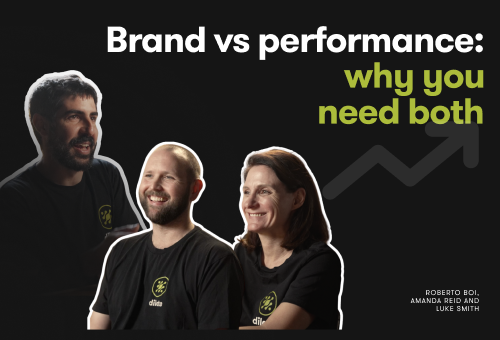
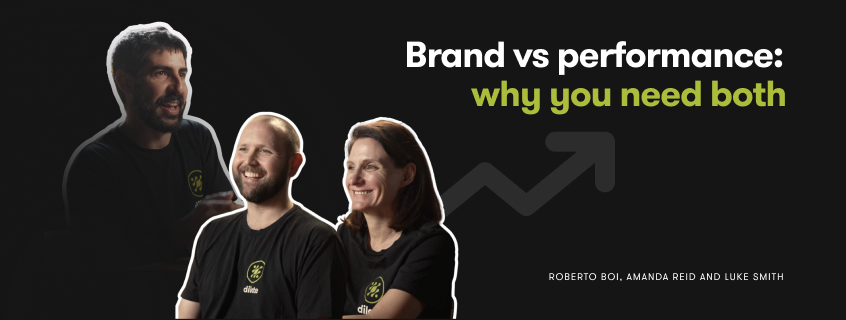
In the latest episode of The better everyday podcast, Amanda and Luke joined me to unpack one of marketing’s most persistent misconceptions: that brand awareness is vague, untrackable, and impossible to prove.
The measurement problem
Most marketing conversations end up in the same place: how do we measure brand awareness? Or more explicitly: how do we prove this is working?
Luke explained to us, brand isn’t about persuading people who are already ready to buy. It’s about reaching everyone else. He says,
“Not everybody is ready to purchase at any given time. Brand awareness is about creating awareness of the brand, the company and the services among people who aren’t ready to purchase yet. Then when they enter that stage, they immediately think of you and how you can solve their problem.”
That’s where things start to break down.
Brand operates on a very different timeline to performance marketing.
Performance campaigns capture intent that already exists. Someone searches for a product, clicks an ad and converts. The relationship between spend and outcome is visible almost immediately.
Brand marketing works earlier in the process. It builds familiarity before the buying moment exists.
When we try to evaluate that using short-term metrics designed for immediate conversions, it inevitably looks harder to measure.
Why brand often gets judged unfairly
Over the past decade, marketing measurement has been shaped heavily by performance platforms.
Tools like Google Ads and Meta made attribution feel precise. Dashboards could show exactly which ad drove which click, which click drove which sale, and what the cost per acquisition was.
Naturally, we all began optimising everything around those numbers. And that’s where things went wrong. Brand started being judged by the same framework.
If a campaign doesn’t generate instant conversions, it’s considered unmeasurable and ultimately written off as a waste of time and resources.
Here the thing though, brand isn’t designed to operate within that window.
Brand creates demand. Performance captures it.
At any given moment, most potential customers aren’t actively looking to buy.
Brand marketing speaks to that larger group.
It ensures that when a trigger eventually occurs, such as a need, a recommendation, or a problem, the brand is already there in memory.
Performance channels then capture that demand when the customer starts searching.
Without that prior familiarity, performance campaigns often end up trying to persuade stone cold audiences.
You may as well be throwing money down the drain trying to convert people who don’t know anything about you.
Where brand impact actually shows up
One of the biggest misunderstandings that I hear is that brand activity leaves no measurable signal.
In reality, it often appears in places many businesses don’t immediately associate with brand marketing.
As awareness increases, more people begin actively looking for the brand itself.
That shows up through indicators like:
- Growth in branded search
- Increased direct website traffic
- Higher conversion rates from performance campaigns
- Lower acquisition costs over time
Luke made a point that I didn’t expect, but it makes complete sense:
“Brand search traffic is hands down the highest converting traffic across almost every business.”
Customers who already recognise the brand require less persuasion. They arrive with context and trust already established.
Brand doesn’t replace performance.
It makes performance work better.
The risk of relying entirely on performance channels
Performance platforms operate through auctions. As more advertisers compete for attention, costs naturally increase.
Over time, this creates a familiar cycle:
CPCs rise.
CPAs climb.
Growth becomes harder to sustain.
I loved this line from Amanda:
“When you have effective brand awareness and brand equity, you naturally see shorter purchase cycles, lower CPAs and a higher-quality audience.”
When awareness is weak, performance campaigns must do all the work themselves, attracting attention, building trust and driving conversion in a single interaction.
Brand marketing reduces that burden earlier in the journey.
Brand requires a longer view
Brand influence compounds.
It rarely appears inside a single reporting period. Instead, its impact emerges through trends: growth in branded demand, improvements in efficiency, and stronger conversion behaviour over time.
At one point, I compared it to fitness training.
One workout won’t transform your body. You’d be crazy to expect to walk out of the gym looking different the next day. But consistent training over months produces visible results.
Brand works the same way.
A single campaign rarely shifts demand overnight. But sustained brand investment compounds. More people become familiar with the business. Recognition builds. The message starts to stick.
Then when the buying trigger happens, the brand is already there in memory.
What looks slow in the short term is almost always what creates momentum in the long term
Brand awareness isn’t the mystery we think it is
The biggest misconception about brand awareness is that it can’t be tracked.
It can.
The challenge is that businesses often try to measure it using short-term performance metrics designed for immediate conversions.
When measured through the right indicators such as share of search, branded traffic, engaged attention and long-term demand growth, the impact becomes much clearer.
The brands that grow sustainably aren’t choosing between brand and performance.
They’re measuring both properly, and understanding how each strengthens the other.
If this topic is on your mind, we explore it in more depth in the latest episode of The better everyday podcast. You can find it on Spotify and YouTube.
And catch up on our previous episode, "More marketing" isn't the answer, if you haven't watched it yet!
View the full podcast transcript below
This transcript has been edited for clarity and readability.
Rob: Welcome to The better everyday podcast. I’m here today with two of my favourite people at Dilate. We’ve got Amanda here, Chico filming, and Luke is here to talk about brand awareness.
There’s a lot to unpack, and I think you two are probably the best people to have this conversation about brand awareness, what it is, and the customer journey. Is the funnel linear? Is it messy? What’s actually going on?
Luke, let’s start with you. What is brand awareness?
Luke: Brand awareness is the capacity for your audience to know who you are and what you stand for.
Rob: Amanda, same question.
Amanda: I think brand awareness is about building awareness not only of your brand but what it stands for amongst your relevant audiences or those out in market. Ideally, over time, it builds equity in that brand.
Rob: Great segue to the next question. Amanda, you come from a media background where brand awareness is a big focus — TVCs, billboards, traditional media, programmatic. Luke, you have more experience in performance marketing.
When we think about brand awareness, we usually think about reach and impressions. But what is brand awareness actually doing in the customer journey? Is it creating demand? Is it pushing people down the funnel?
Luke: Not everybody is ready to purchase at any given time. Brand awareness is about creating awareness of the brand, the company and the services among people who aren’t ready to purchase yet. Then when they enter that stage, they immediately think of you and how you can solve their problem.
Rob: When speaking to marketing managers and boards, there’s a huge obsession with measuring marketing efforts — attribution and performance. Performance marketing is seen as measurable and accountable.
So why are so many brands so reliant on paid media and investing more and more into it if brand awareness is harder to measure? Or can we measure it?
Amanda: I think we can, and we’re getting better at it.
Over the last decade there’s been a huge shift towards ROI and the ability to report data points to stakeholders. But we’ve also learned that there are different ways to measure success — performance metrics as well as brand metrics like brand uplift or brand search terms.
As an industry, we’re getting better at measuring brand.
Luke: The tool Kieron and I are working on looks at share of search — your brand search relative to your competitors.
Over time that can act as a proxy for brand research. At a high level, what we want to do is increase the number of people searching for our brand. If that increases, it’s a good indicator that brand awareness is improving.
Rob: Coming from a performance background, I still see a lot of brands obsessed with performance marketing. Do you think they’re optimising short-term performance at the expense of long-term demand creation? Because that’s what brand awareness really does.
Amanda: I think as an industry we’re realising the opportunity cost of doing that. When digital channels exploded, many clients shifted budgets almost entirely to bottom-of-funnel digital activity.
Even large global brands did that. But over time they saw the impact and started reinvesting in brand.
We’re now in a space where clients understand how brand and performance complement each other. That’s something I love about the Dilate team — we understand the role each element of the funnel plays.
Rob: So an ecosystem.
Amanda: 100%.
Rob: What problem does brand awareness solve that performance marketing can’t?
Luke: We often think of traditional media and programmatic as brand awareness channels, while social and Google ads are considered activation channels.
But I’d argue you can achieve brand awareness with those activation platforms too.
For example, a newspaper ad promoting a massive sale isn’t brand awareness — that’s activation. The platform itself isn’t exclusively one thing.
The difference is whether the audience understands your brand, your product and your message. If they’re engaging with the content and understanding it, that’s brand awareness.
Amanda: I think awareness and performance work hand in hand.
When you build brand awareness and brand equity, you typically see shorter purchase cycles, lower CPAs, lower cost per leads, and a more engaged audience.
So awareness supports performance across multiple areas.
Rob: You’ve got to zoom out, right? You can’t just look at one month. You have to look over time.
Luke: Exactly. If you look at brand search traffic, it’s usually the highest converting traffic for most businesses.
Amanda: But take a step back — what makes someone search for a brand? Usually it’s because they’ve seen something before. A TV ad, a bus ad, something that triggered them. Then they search, and at that point they’re already a stronger prospect.
Rob: Let’s talk about the customer journey funnel. Most marketing models assume awareness, consideration, conversion. Different names, same idea.
Is that actually how people make decisions?
Amanda: It’s an oversimplified version. The journey isn’t linear. It should be tailored to each brand and product.
B2C and B2B journeys are very different. B2B can involve multiple decision-makers and a longer process.
Luke: Businesses use the funnel because it simplifies things. It gives teams a shared language.
But in reality every sales cycle is different, and if you’re looking at the full customer experience it’s definitely not linear. You want to re-engage customers and extend lifetime value.
Rob: Google calls it the “messy middle”. People don’t move neatly through a funnel — they zigzag around.
So why do brands still use linear funnels?
Luke: Because they’re easier to communicate. They give teams a consistent framework.
Also, visualising a circle in Excel is very difficult.
Rob: True.
If most buyers aren’t ready to buy, what role does awareness play?
Amanda: It ensures that when the trigger happens and someone has a need, your brand is top of mind.
Luke: It can also make people aware of the problem itself. If someone doesn’t realise they have a pain point, awareness creative can highlight it.
Rob: There’s a well-known concept from Byron Sharp: 5% of people are in market and 95% are off market.
Do you agree with that? And how do we move people from the 95% to the 5%?
Luke: Broadly, yes. The objective is to bring the decision forward — make the problem top of mind and create demand.
Rob: If that’s true, does performance marketing ignore 95% of buyers?
Luke: If it’s purely focused on conversion, then yes.
Amanda: But performance channels don’t have to be used only for conversion. They can play multiple roles depending on the objective.
Rob: The challenge then becomes how we justify investing in marketing for audiences that may not buy for months or years. That’s often the conversation with CFOs.
Luke: That’s why measurement tools are important. If we can show improvements in brand awareness and connect those improvements to revenue over time, that’s powerful.
Amanda: And it gives clients access to measurement tools they might not normally have when assessing awareness activity.
Rob: Let’s talk about awareness versus attention.
If reach measures awareness, what should we measure to understand attention?
Amanda: Attention is a big part of awareness. Not all reach is equal.
A six-second YouTube bumper ad is not the same as a 60-second cinema ad. The difference is attention.
Research shows that anything over about two and a half seconds is considered effective reach, and longer exposure improves recall.
Luke: That’s why we should look at metrics like engaged views or completion rates. When you combine that with cost metrics, like cost per engaged view, it becomes a better indicator of quality awareness.
Amanda: And awareness becomes more effective when multiple channels work together. For example, if someone sees a 30-second TV ad, then later sees a six-second digital ad, that second exposure is much more powerful.
Rob: Critics often say awareness campaigns are expensive and based on guesswork. How do we separate strategic awareness from spray-and-pray?
Amanda: Today we have access to more data and research than ever before. Media decisions shouldn’t be based on guesswork.
We have audience data, reporting, and insights into who has seen our ads and what they did afterwards.
Rob: What makes the difference then — targeting, placement, creative?
Amanda: All of it. But creative still plays a huge role. You can have the perfect targeting and channel plan, but if the message doesn’t resonate, it won’t work.
Luke: Keeping messaging simple and tied to your brand associations is key for long-term brand perception.
Rob: So creative is sometimes undervalued?
Luke: Definitely. The best creative work happens when brands have a clear understanding of who they are and who their audience is.
Problems happen when messages get diluted or when brands don’t know what they stand for.
Rob: If a business has never invested in awareness before, how should they start thinking about it?
Luke: The responsibility is on us as marketers to show them that it’s an option and demonstrate the impact it can have.
Amanda: We’ve seen the impact across many clients and categories. Brand investment improves performance metrics.
Rob: If I’m a CFO looking at the P&L and asking why we should invest in awareness, what would you show me?
Amanda: I’d show the different conversion points throughout the funnel — website visits, downloads, enquiries and final conversions — to demonstrate how awareness influences the entire journey.
Luke: Eventually performance channels hit diminishing returns. The question then becomes how to increase the number of people aware of the product or the problem.
That’s where brand awareness comes in.
Rob: If a brand could only choose one strategy — performance or brand — which would create more growth over five years?
Luke: I wouldn’t put all my eggs in one basket. It depends on the business and its budget.
Amanda: If budgets are tight, start with performance channels to drive short-term results. Then reinvest the growth into expanding the media mix and building awareness.
Rob: Let’s close with this. What’s the biggest misconception marketers still have about brand awareness?
Luke: That it can’t be tracked.
Amanda: I agree. People think attribution only applies to paid digital channels, but we can measure brand impact as well.
Rob: And that’s important. A lot of people think you don’t need a brand — they start a Shopify store and try to sell cheap products. But those stores often disappear quickly because there’s no brand, no story, no reason for people to buy.
If you create a story and a purpose behind the product, that changes everything.
Amanda: It also depends on what you’re buying. For some things price matters. But for bigger decisions people choose brands they trust.
Rob: Thanks for being here and talking about brand awareness. We have these conversations all the time around the office, so it’s great to record one.
Subscribe to the podcast and we’ll see you next time.