

How to tie your creative strategy to brand

May 04, 2026
By Luke Smith
Most creative does what it’s meant to do.
It gets produced. It goes live. It’s optimised, refined, tested, and iterated. In many cases, it even performs. Clicks come in. Metrics move. Dashboards light up.
And then… nothing really changes.
Brands are producing more creative than ever before. Performance teams squeeze efficiency out of it. Designers refine the craft. Platforms reward the activity. Yet growth rarely compounds in the way it should.
It’s not a talent or quality problem. It’s what creative is being asked to do.
When creative is treated as output rather than strategy, it can work in the moment without building anything that lasts. Without brand to anchor it, creative becomes noise, just dressed up with better fonts.
Creative ≠ brand
This is where a lot of teams get tangled.
Creative and brand are closely related, but they’re not the same job. Treating them as interchangeable is usually where things start to drift.
Brand strategy defines what you want to be remembered for. It sets the associations you’re trying to build and the mental territory you want to occupy. In other words, it decides what needs to stick long after someone has stopped paying attention.
Creative strategy, on the other hand, is about how those associations show up in the real world. The ideas, cues, language, and patterns people actually experience across ads, channels, and touchpoints.
In other words, brand decides what must stick. Creative decides how it sticks.
Why creative breaks when it’s disconnected from brand
When creative isn’t anchored to brand, the symptoms are usually obvious (even if the cause isn’t).
Common patterns show up quickly:
- Every campaign sounds different, even when the product hasn’t changed
- Creative resets every quarter instead of building on what came before
- “Winning ads” deliver short-term results but don’t build memory
- Performance improves briefly, then hits a ceiling
On the surface, this looks like inconsistency or poor execution. In reality, it’s structural.
Each new idea has to work hard on its own. Nothing carries forward and nothing can compound in the first place. This is where campaigns fail. Not because brand strategy is wrong, but because creative is being produced for the sake of creative.
The throughline: Where brand and creative connect
Brand and creative don’t connect by accident. They connect through a throughline.
A creative throughline is what carries meaning from one execution to the next. It’s the link between long-term brand building and short-term sales activations, so each piece of creative adds to the same mental picture rather than competing with it.
You usually recognise it through a few familiar signals:
- A central idea everything points back to
- An emotional cue that shows up again and again
- A pattern that feels recognisable, even as formats change
When that throughline is doing its job, creative starts to feel familiar without becoming stale. The brand becomes easier to place, easier to remember, and easier to choose.
It’s easier to see how this works with a real example.
What this looks like in practice
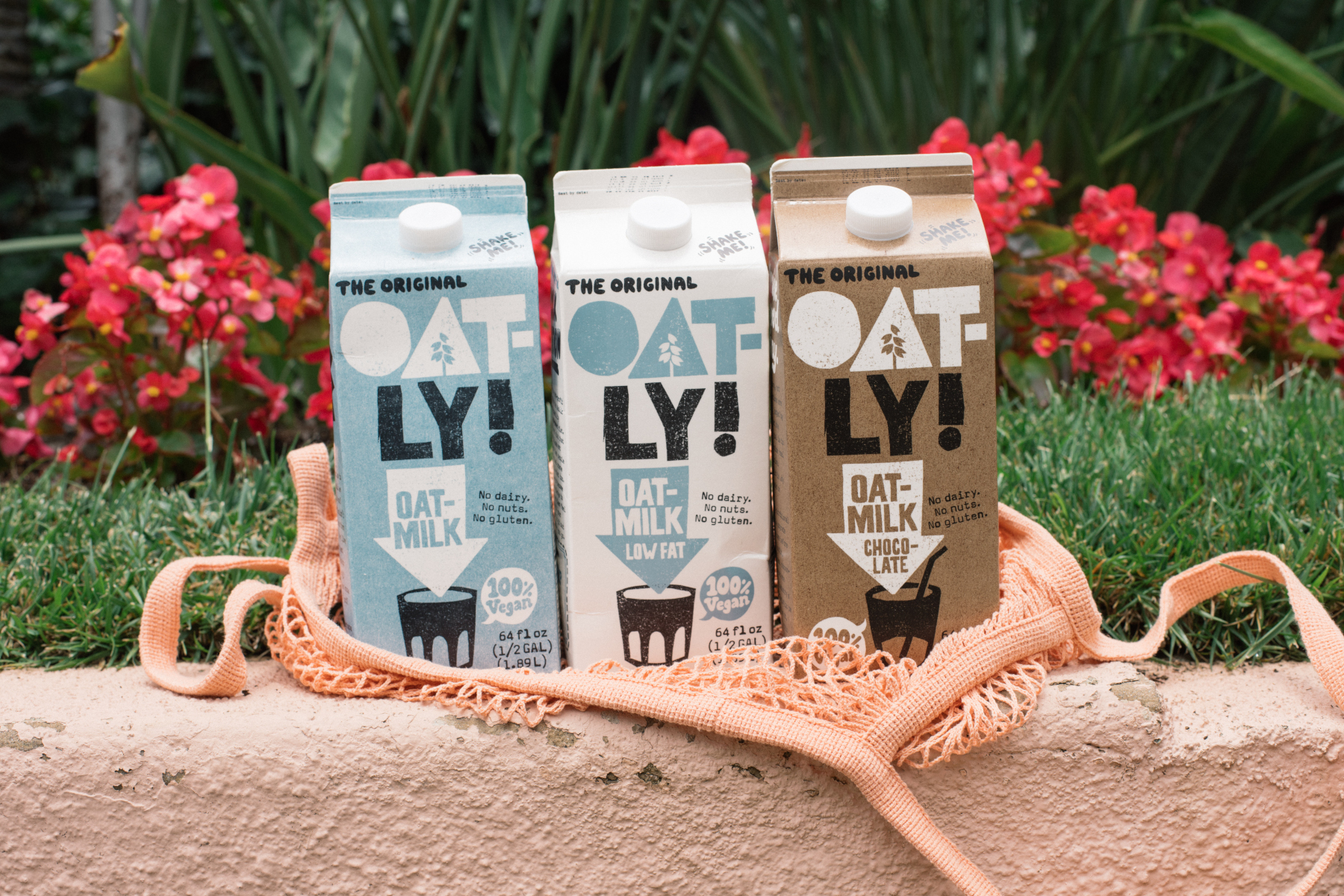
Think about a brand like Oat-ly. Their product (oat milk) is genuinely unremarkable as a category. It's a dairy alternative and as a concept, has been around forever. The functional benefit is obvious and easy to copy.
What isn't easy to copy is the way their creative makes you feel. Weird humour. Intentional awkwardness. Copy that speaks directly to the reader like a friend who's slightly too honest. That tone is consistent across every format from cartons to billboards and even their digital presence (social, video, email). It doesn't matter if they're running a product ad or a brand awareness campaign. You always know it's them before you see the logo.
That recognition doesn't come from the product. It comes from a throughline that runs through every piece of creative they've ever made.
The mental territory they own which is irreverent, direct, a little self-deprecating took years to build. But because every execution adds to the same picture instead of competing with it, it compounds. New customers get it faster. Recall is instant. The brand becomes easier to choose without needing a lower price.
That's what brand-anchored creative actually does. It's not about being consistent for the sake of it. It's about building something that gets stronger the more you put in.
Tying it together
Most brands aren't failing because their creative is bad. They're failing because good creative isn't being asked to do enough.
When brand and creative work from the same brief, something shifts. Campaigns build on each other. Memory accumulates. Recognition comes faster. And the harder you work in the short term, the more you get back in the long term, because nothing starts from zero.
That's the case for connecting creative strategy to brand. Not as a philosophical exercise. As a growth lever.
If you want help building a creative strategy that actually connects to your brand, talk to the team at Dilate.
Some FAQs on creative strategy
What's the difference between brand strategy and creative strategy?
Brand strategy defines the territory you want to own such as the associations, feelings, and memories you're trying to build in someone's mind over time. Creative strategy is how you actually build them. It's the ideas, cues, language, and patterns that show up in real executions. Brand is the destination. Creative is how you get there. You need both, and they need to be speaking to each other.
How do I know if my creative is disconnected from brand?
A few signals to look for: your campaigns sound different from one another even when the product hasn't changed, your team resets the creative brief every quarter instead of building on what came before, and your "best-performing" ads aren't making your brand more recognisable over time, just cheaper to acquire for now. If creative has to work hard every time without anything carrying forward, brand and creative aren't connected.
Does this apply to performance marketing, or just brand campaigns?
Both. Performance creative that's disconnected from brand tends to hit short-term metrics without building anything underneath. Over time, CPAs creep up because the brand isn't doing any of the heavy lifting. When performance creative is anchored to brand (same visual cues, same tone, same emotional territory) it earns short-term results while adding to long-term memory. The two aren't in conflict. They're meant to reinforce each other.
Where do I start if my creative and brand feel misaligned?
Start with a simple audit. Look at your last six months of creative executions side by side. Ask: does this look like it came from the same brand? Would someone recognise us without seeing the logo? If the answer is no, you don't necessarily need a rebrand, you need a throughline. Define what must always feel familiar, what cues can never change, and what can flex by channel. That brief is the starting point.